Why Your Home Alarm System Might Not Be Protecting You Properly
Many homeowners install alarm systems believing they now have complete protection. Alarm systems are an important part of residential security, but simply having an alarm installed does not automatically guarantee that your property is properly protected.
During residential security inspections in Somerset West, Strand and Gordon’s Bay, it is common to discover alarm systems that are technically installed but not functioning as effectively as homeowners expect.
In some cases, the system may be outdated. In others, poor sensor placement or lack of maintenance may reduce its effectiveness. Understanding these potential issues can help homeowners ensure their alarm system provides reliable protection.
Below are several common reasons why a home alarm system may not be working as well as it should.
Outdated Alarm Equipment
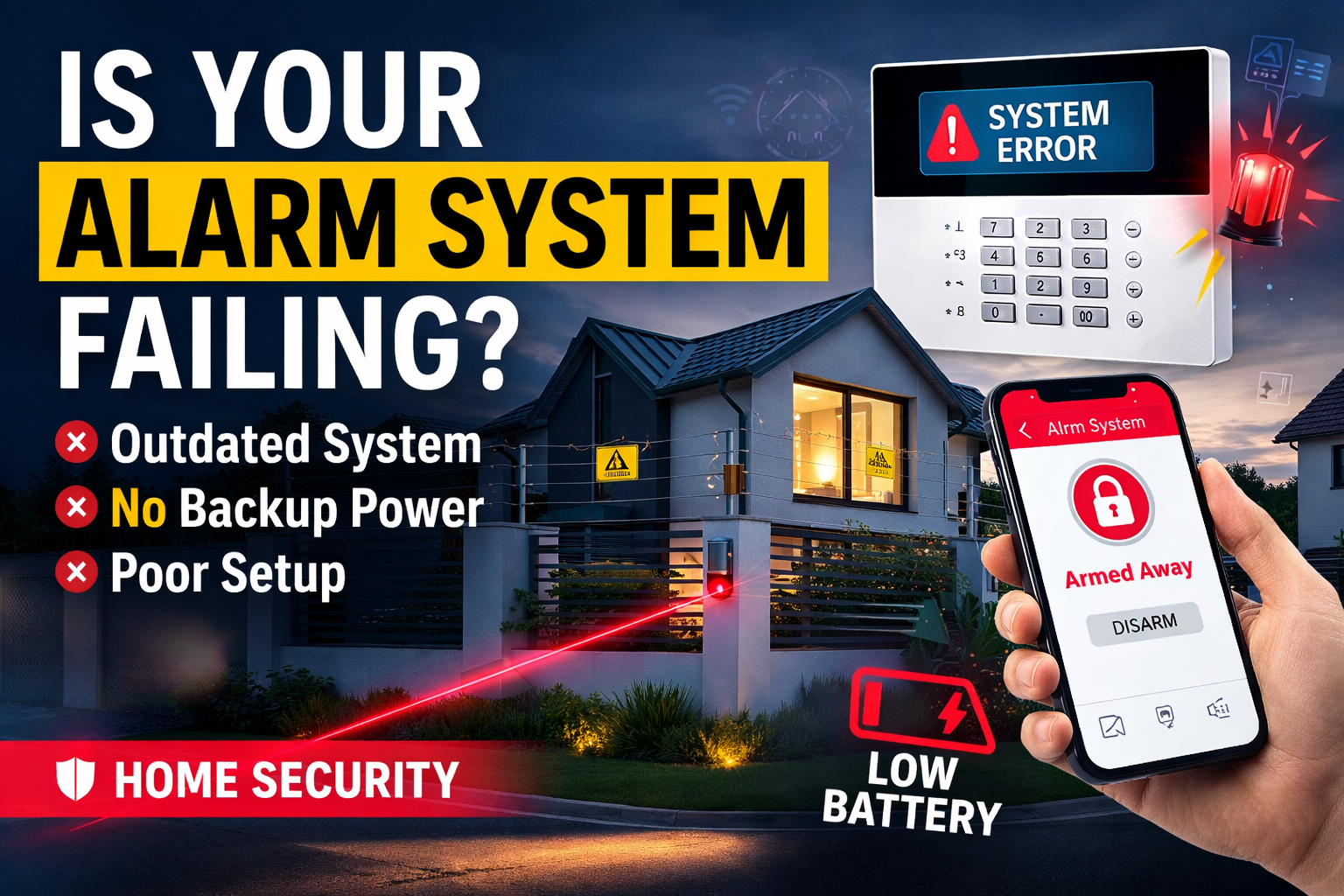
Technology evolves quickly, and alarm systems are no exception. Older systems may still function, but they often lack the features and reliability of modern security technology.
Some older alarm systems may:
- Use outdated control panels
- Have limited detection capabilities
- Lack mobile notifications or remote monitoring
- Provide weaker protection against tampering
While older systems may still trigger an alarm, they may not provide the same level of early warning or reliability as newer systems.
What homeowners can do
If your alarm system was installed many years ago, it may be worth having it inspected to determine whether an upgrade could improve security.
Poor Sensor Placement
Even modern alarm systems depend heavily on correct sensor placement.
Sensors that are incorrectly positioned may leave parts of the home unprotected.
Examples include:
- Motion sensors facing the wrong direction
- Sensors placed behind furniture or curtains
- Entry points such as windows or side doors without contact sensors
When sensors are poorly positioned, intruders may be able to move through the property without triggering the system.
What homeowners can do
A professional inspection can identify blind spots and ensure sensors cover the most important entry points.
Weak Battery Backup
Load shedding and power outages have become a reality across South Africa. For alarm systems to remain reliable, battery backup systems must be in good condition.
If the battery backup becomes weak or worn, the alarm system may stop functioning during power interruptions.
Common warning signs include:
- Alarm panels showing battery warnings
- Shorter operating time during outages
- Frequent system resets after power returns
What homeowners can do
Alarm system batteries should be tested periodically and replaced when necessary to ensure the system continues operating during load shedding.
Ignored Warning Signals
Many alarm systems display warning indicators when something is wrong.
These warnings might include:
- Low battery alerts
- Sensor malfunctions
- Communication issues with monitoring services
However, homeowners sometimes ignore these warnings if the system still appears to function normally.
Over time, unresolved issues can weaken the effectiveness of the security system.
What homeowners can do
If your alarm panel displays alerts or warning messages, it is important to have the system checked promptly.
Lack of Perimeter Detection
One of the most common misconceptions about residential security is that an indoor alarm system alone is sufficient.
In reality, interior alarm sensors often activate only after an intruder has already entered the property.
A stronger approach is to combine interior alarms with perimeter security systems that detect intrusion attempts earlier.
Examples include:
- Electric fences installed along boundary walls
- Outdoor beam sensors monitoring movement
- CCTV cameras covering access points
These systems create a layered security approach that improves overall protection.
Poor Integration With Other Security Systems
Modern residential security systems often include several components working together.
An alarm system should ideally integrate with:
- Electric fence energisers
- CCTV surveillance cameras
- perimeter sensors
- mobile monitoring systems
When these systems work together, they provide both detection and visual verification of suspicious activity.
If an alarm system operates in isolation, it may not provide the same level of protection.
Lack of Regular Maintenance
Security systems require occasional inspection and maintenance to remain effective.
Over time, environmental factors such as dust, moisture or coastal exposure can affect sensors and electrical connections.
Common maintenance issues include:
- Loose wiring connections
- Sensors that need recalibration
- ageing batteries
- environmental interference affecting sensors
Regular maintenance ensures the system continues to operate as designed.
Final Thoughts
Alarm systems are one of the most valuable tools for protecting residential properties. However, they are most effective when properly installed, maintained and integrated with other security systems.
For homeowners in Somerset West, Strand and Gordon’s Bay, ensuring that alarm sensors are correctly positioned, batteries are functioning properly and perimeter systems are in place can greatly improve home security.
Helderberg Security Services offers a Free Perimeter Security Assessment for homes in the Helderberg area, helping homeowners identify potential vulnerabilities and ensure their alarm systems and perimeter security solutions are operating effectively.
Taking the time to review your alarm system today can help ensure your home remains properly protected.