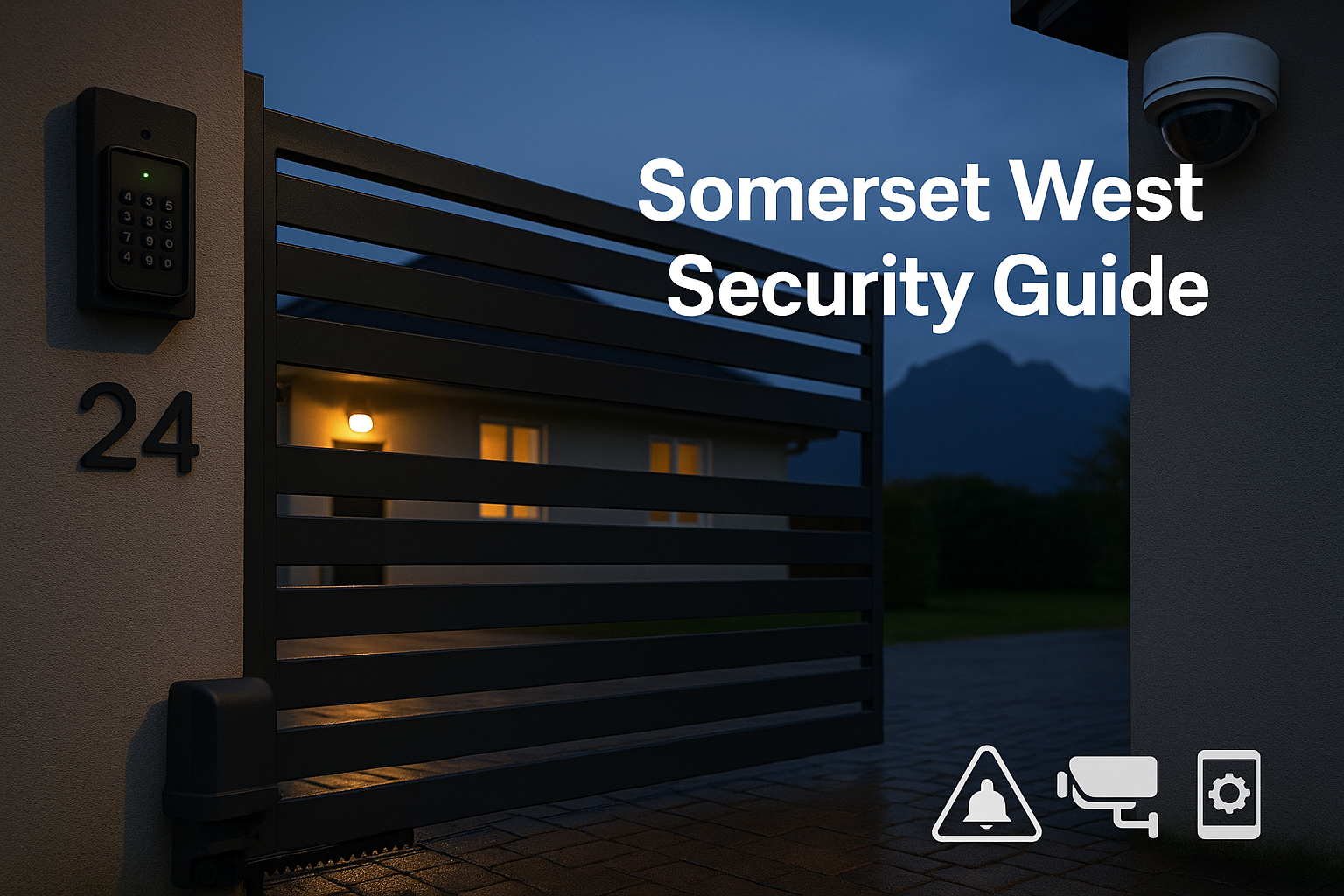
The Helderberg Home & Business Security Guide: Alarms, CCTV, and Gate Motors (Somerset West Focus)
Security in the Helderberg isn’t a one-size-fits-all exercise. Homes in Somerset West face different risks to retail premises near Somerset Mall or smallholdings towards Sir Lowry’s Pass. This practical guide outlines how to build a layered, locally appropriate solution using three pillars: alarm systems, CCTV, and gate motors/access control—with clear steps, costs to consider, and compliance pointers.
Why “layered security” works in Somerset West
Layered security combines:
- Perimeter (fencing, beams, gates)
- Detection (alarms, sensors, CCTV analytics)
- Response (sirens, lights, armed response, notifications)
- Access control (gate motors, intercoms, remotes, tags)
Done properly, layers deter intruders, shorten incident response times, and reduce false alarms—especially useful during load-shedding evenings and winter’s early darkness.
1) Alarm Systems in the Helderberg
What a modern alarm should include
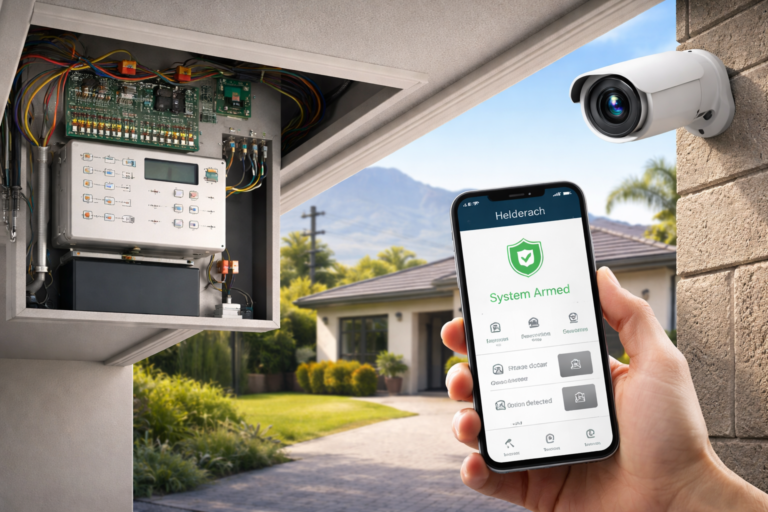
- Hybrid control panel (wired + wireless expandability for additions over time).
- Zoned sensors: passives (PIR), door/window reeds, outdoor beams for early warning.
- Partitioning for Granny flats, offices, or staff quarters.
- Smart notifications via app (arming/disarming, open zones, power failures).
- Siren and strobe placement to be clearly audible yet neighbour-friendly.
- Professional monitoring options (armed response integration if required).
Load-shedding resilience
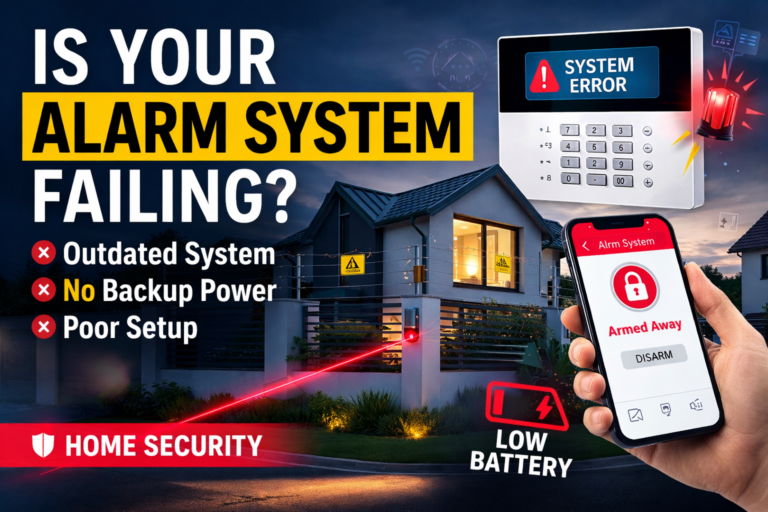
- Deep-cycle backup battery sized for longer outages.
- Low-draw components (grade sensors, efficient keypads).
- Optional solar trickle charge on rural or exposed sites.
False-alarm reduction in Cape winds
- Correct sensor selection and placement (avoid facing moving foliage; use pet-immune PIRs).
- Outdoor beams with anti-masking and creep-zone coverage for patios and verandas.
- Regular servicing: dust, insects, and oxidation cause misfires.
Best for:
- Homeowners in Somerset West, Strand, Gordon’s Bay needing reliable detection.
- Townhouses/estates where early outdoor alerts are vital.
- Small businesses that need arming logs and user-level control for staff.
Recommended next step: Book a site survey to map zones (perimeter first), plan cable runs, and size the battery correctly.
2) CCTV Systems in Somerset West
The case for cameras
CCTV helps with verification (is it a person or a cat?), supports evidence after incidents, and prevents crime when combined with signage and lighting. For retailers and offices, it’s invaluable for operations (till points, stockrooms, entrances, parking).
What to specify
- Resolution & lenses: 4MP–8MP for clarity; lens choice matches distance and field of view (driveways vs wide gardens).
- Night performance: True IR or colour-at-night with appropriate lighting; avoid over-exposed number plates.
- NVR with local storage and UPS/backup to ride out outages.
- Smart analytics: Human/vehicle detection reduces false alerts from wind and rain.
- Remote viewing: Secure app with two-factor authentication.
- Network hygiene: Segmented VLAN/Wi-Fi, strong passwords, firmware updates.
POPIA & privacy notes (practical, not legal advice)
- Clear signage where cameras monitor public-facing areas.
- Retention policy (e.g., 14–30 days) aligned to storage capacity and business needs.
- Access control to footage (named, authorised users only).
- Footage export protocol when SAPS requests evidence.
Typical placements by property type
- Homes: gate/driveway, front door, back door, patio, side alleys, boundary hotspots.
- Estates/HOAs: entrances, pedestrian gates, perimeter choke points.
- Shops/offices: entrances, POS/tills, stockrooms, loading bays, staff entrances, parking.
Recommended next step: A lens-by-lens plan with distances, lighting checks, and a backup power calculation for your NVR and router.
3) Gate Motor Installation in Somerset West
Why the gate is your first line of defence
Your gate determines dwell time for would-be intruders. An unreliable motor or wobbly track invites tailgating and opportunistic access.
Specify for local conditions
- Motor sizing for gate weight and duty cycle (heavy coastal-air gates need torque).
- Anti-lift brackets and end-stops to resist forced opening.
- Metal gearset options for longevity; sealed units for sea air near Strand/Gordon’s Bay.
- Battery backup sized for peak load; consider solar assist on long driveways.
- Safety beams (child/pet safe) and manual release that’s easy but secure.
- Access credentials: rolling-code remotes, tag readers, keypad, or app.
- Intercom (audio/video) and optional visitor pin logic for deliveries.
Maintenance that actually matters
- Quarterly service: clean track, check rack alignment, tighten fasteners.
- Test safety beams and limit switches; replace tired batteries pre-emptively.
- Weatherproofing: inspect glands, sealed junction boxes, and conduit.
Recommended next step: On-site motor sizing, rack/track check, and safety beam placement before final quote.
Putting it together: a simple layered plan
Week 1: Assessment
- Security walk-through (day and night) around Somerset West property.
- Identify entry routes, blind spots, and lighting gaps.
- Prioritise quick wins: gate beam alignment, door reeds, garden side-gate locks.
Week 2: Perimeter + Detection
- Service/upgrade gate motor and add anti-lift brackets.
- Fit outdoor beams on patios and common approach paths.
- Add/upgrade alarm panel and app with named users.
Week 3: Verification + Response
- Install NVR, cameras, and signage; set remote access with 2FA.
- Create alert rules (human/vehicle), test at night.
- Decide on armed response integration and escalation flow.
Ongoing: Quarterly service (alarm batteries, camera cleaning, gate track), firmware updates, user audit.
Quick comparison
| Pillar | Main Job | Key Win | Common Pitfall | Must-Have in Helderberg |
|---|---|---|---|---|
| Alarm | Detect & deter | Fast, loud response | Poor sensor placement = false alarms | Outdoor beams; right battery for load-shedding |
| CCTV | Verify & record | Evidence + remote eyes | Over-wide lens = useless detail | Night-ready lenses; UPS for NVR/router |
| Gate Motor | Control access | Reduce tailgating | Under-sized motor on heavy gate | Anti-lift hardware; safety beams; solar assist if needed |
FAQs
1) Will my system still work during load-shedding?
Yes—if correctly specified. Choose efficient devices and the right battery/UPS sizing. Consider solar assistance on long driveways.
2) Can I arm the alarm while the family is at home?
Use stay or partial modes with indoor PIRs bypassed and outdoor beams active. Partitioning helps for flats/offices on the same property.
3) How long should I keep CCTV footage?
Practically, 14–30 days suits most homes and small businesses, subject to storage and your operational needs. Add signage and restrict access to footage.
4) My gate sometimes sticks in the wind—do I need a new motor?
Not always. It could be rack alignment, track debris, or end-stop issues. A service visit can save you replacing the motor.
5) Can I integrate everything into one app?
In many cases, yes. We can align alarm notifications, camera viewing, and gate control depending on chosen hardware.