The Fine Print That Costs a Fortune: Why SAIDSA Registration is Your Insurance Lifeline
Imagine this: You’ve just returned to your home in Somerset West after a weekend away, only to find you’ve been burgled. You aren’t panicked—at least, not yet. You’ve paid your insurance premiums religiously for years, and your alarm system is active.
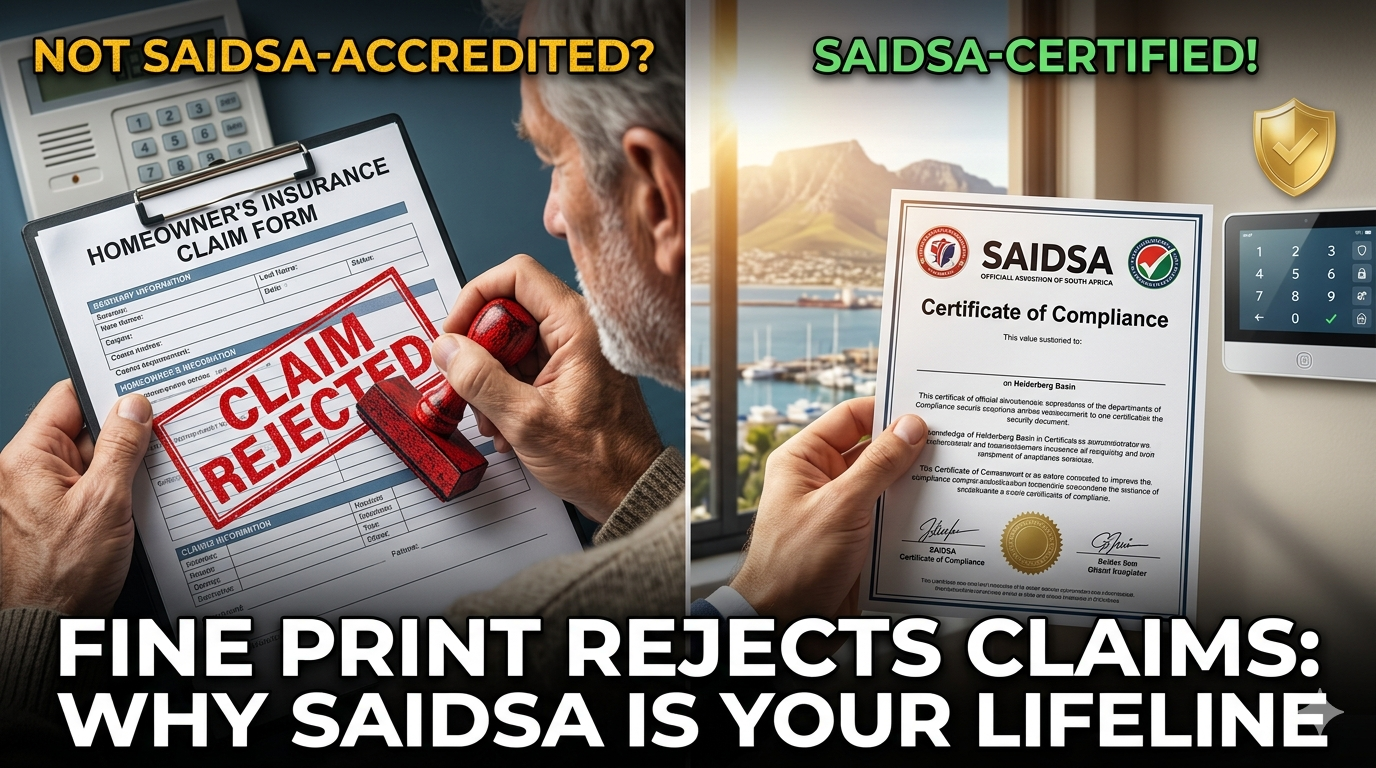
Then comes the phone call that changes everything. The assessor looks at your hardware, asks for your installation certificate, and delivers the news: Claim rejected. Why? Because your security provider wasn’t SAIDSA-accredited. In the Helderberg, we see this tragedy play out more often than we should. To be a “Helderberg Authority,” we believe in protecting your wallet just as much as your perimeter. Here is the breakdown of the “alphabet soup” of security regulations and why it matters for your bank account.
PSiRA vs. SAIDSA: Know the Difference
Most residents see a sticker on a response vehicle and assume everything is above board. But there is a massive gap between “legal to operate” and “certified to protect.”
1. PSiRA (The Legal Minimum)
The Private Security Industry Regulatory Authority (PSiRA) is the government-mandated body. Every security guard and technician in South Africa must be registered with PSiRA. It’s essentially a background check to ensure the person in your house isn’t a criminal.
- The Analogy: PSiRA is like having a driver’s license. It says you are legally allowed to be on the road.
2. SAIDSA (The Gold Standard)
The South African Intruder Detection Services Association (SAIDSA) is a voluntary association that sets the actual technical and ethical standards for the industry.
- The Analogy: SAIDSA is like having a five-star safety rating and advanced driver training. It proves that the “car” (your alarm) is built to a specific standard and will actually perform when you hit the brakes.
Why Your Insurer Cares About SAIDSA
Insurance companies are in the business of calculating risk. They know that a non-accredited “bakkie-brigade” installer might save you R1,000 today, but they might use sub-standard cabling, poorly positioned sensors, or a control room that doesn’t meet response-time bylaws.
If your insurance policy states that you must have a “linked alarm system,” they often imply a system that meets SAIDSA specifications. If your installer isn’t accredited:
- They can’t issue a SAIDSA Certificate of Compliance (CoC).
- The insurer can argue the system was “ineffective” at the time of the loss.
- You may be held liable for the “failure to mitigate risk.”
Pro Tip: Check your policy schedule today. Look for terms like “Approved Installer” or “SABS/SAIDSA Standards.” If you see those words and your provider isn’t on the SAIDSA member list, you are effectively self-insured.
The “Control Room” Reality Check
Being “Helderberg’s Authority” means being transparent about what happens behind the scenes. SAIDSA-certified providers must follow strict Bylaw 25 regulations regarding their control rooms. This includes:
- Redundant Power: Ensuring the control room stays online during Stage 6 load shedding (no “system down” excuses).
- Response Times: Strict requirements for how quickly a signal must be acknowledged and a vehicle dispatched to your street in Strand or Gordon’s Bay.
- Voice Recording: All radio and phone traffic must be recorded for accountability. If a response officer claims they were at your gate in 3 minutes but the GPS says 10, a SAIDSA-certified firm has the data to prove it.
Don’t Pay for “Security Theater”
Installing a security system without SAIDSA accreditation is what we call “Security Theater”—it looks like protection, but it has no substance when the curtain falls.
If you live in the Helderberg Basin, you’ve invested heavily in your home. Don’t let a “cheap” installation jeopardize your insurance coverage.
Is your current provider SAIDSA-certified? Don’t guess. We offer a Compliance Audit for Helderberg residents. We’ll inspect your system, check your certificates, and ensure that if the worst happens, your insurance company doesn’t have a single “fine print” excuse to walk away from your claim.