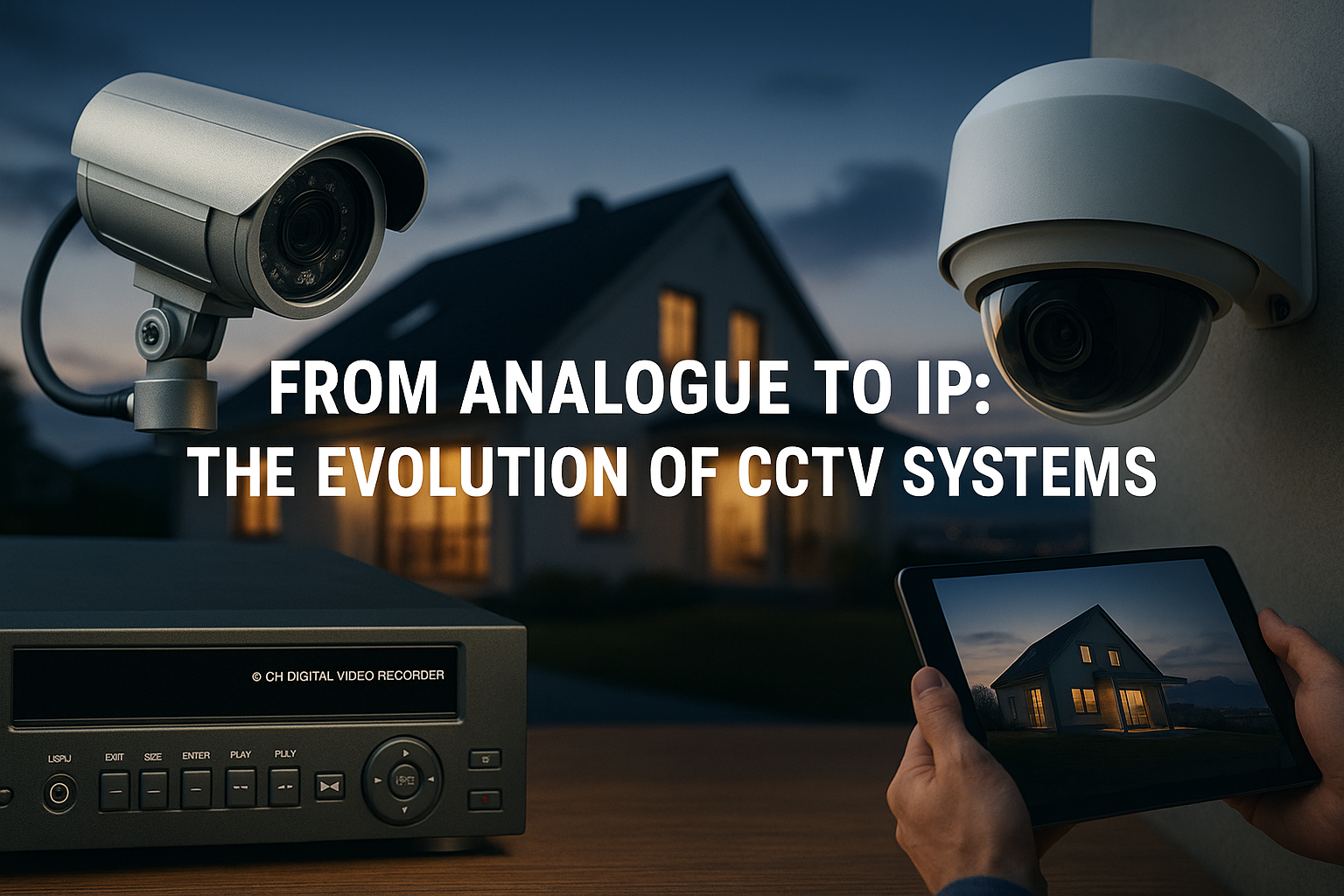
From Analogue to IP: The Evolution of CCTV Systems in South Africa
CCTV has become a standard part of home and business security in South Africa. Yet the technology behind it has changed dramatically over the past two decades. What began as grainy analogue footage stored on VHS tapes has evolved into high-definition, networked, AI-assisted systems capable of identifying human movement, capturing licence plates, and alerting you instantly when something happens.
Understanding this evolution helps homeowners and business owners make better decisions when upgrading older systems. It also highlights the value of modern surveillance in a country where crime, load-shedding, and infrastructure challenges place heavy demands on security technology.
The Early Days of CCTV in South Africa
When CCTV first entered the South African market, most systems were fully analogue. Cameras transmitted footage through coaxial cable to a recorder, often a VHS machine or early DVR. These systems served as a basic deterrent, but their limitations were significant.
Analogue cameras offered very low resolution. Identifying faces, number plates, or clothing details was nearly impossible unless the subject was extremely close to the camera. Storage was limited, tapes degraded quickly, and the process of finding footage was slow and manual. The analogue era laid the foundation for surveillance culture, but the technology simply could not keep up with the growing demands of crime prevention.
The Transition to Digital DVR Recording
The introduction of digital video recorders was a major step forward. Footage could now be stored digitally on hard drives instead of tapes. This allowed better access to recordings, easier searching by date and time, and longer retention periods.
However, the cameras were still analogue. Picture quality improved slightly, but the core limitations remained: low clarity, poor night vision, and weak performance in high-contrast lighting. DVRs made CCTV easier to use but did not solve the problems that mattered most to South Africans who needed clear, reliable evidence.
The HD Analogue Breakthrough
Around 2014, high-definition analogue technology arrived in South Africa. AHD, HD-TVI, and HD-CVI systems allowed homeowners and businesses to achieve 720p, 1080p, and eventually even 5MP and 8MP resolution while keeping their existing coaxial cabling.
This shift was transformative for three reasons.
Firstly, the image quality was finally good enough to recognise faces and number plates. Secondly, upgrading became cost-effective because old cabling could remain in place. Thirdly, installers could roll out HD systems quickly, making surveillance more accessible for average homeowners.
For many properties, HD analogue remains a practical option, but it lacks the scalability and intelligent features of modern IP systems.
The Rise of IP CCTV: A True Technological Shift
Internet Protocol (IP) cameras represent the biggest leap in CCTV evolution. Instead of sending analogue video down a coax cable, an IP camera transmits digital data through a network. This allows far higher resolution, more control, and significantly better reliability.
IP cameras use Power-over-Ethernet, meaning a single network cable supplies both power and communication. This makes installation cleaner and more flexible. Video quality ranges from 4MP to 4K and beyond, delivering exceptional clarity even in low-light conditions.
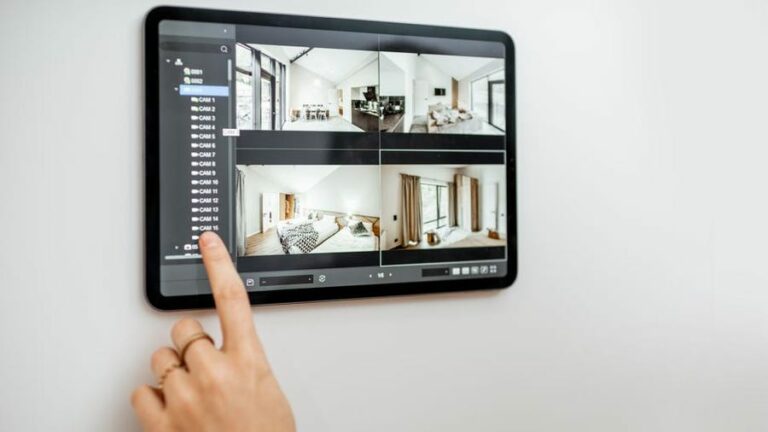
Advanced features include smart motion detection, tamper alerts, wide dynamic range for harsh lighting, and the ability to zoom digitally without losing detail. Importantly, IP systems are designed for remote access, so homeowners can view live footage and recordings from anywhere.
To explore modern solutions, see CCTV Systems Helderberg.
Smart Analytics and AI: The Modern Edge
Newer IP cameras incorporate artificial intelligence and intelligent analytics. Instead of simply detecting movement, they can distinguish between humans, vehicles, and animals. This dramatically reduces false alarms caused by shadows, insects, pets, or passing headlights.
Advanced features now include line-crossing alerts, region-of-interest monitoring, licence plate recognition, suspicious behaviour detection, and cloud-based event storage. Cameras can notify a homeowner the moment a person enters a driveway, even during load-shedding.
AI has shifted CCTV from a passive recording tool to an active, preventative security layer.
The South African Reality: Load-Shedding, Cable Theft, and Harsh Conditions
CCTV systems in South Africa face challenges that installers in other countries seldom encounter.
Load-shedding is the most obvious. Cameras and recorders must run on inverter or battery backup, and systems must recover automatically. IP cameras are more energy-efficient than older analogue systems, making them easier to integrate into backup power solutions.
Cable theft is another major issue. Analogue systems rely heavily on copper coaxial cables, which are often targeted. IP systems using Power-over-Ethernet can run on copper, but many modern installations use fibre or shielded cable that offers better protection against interference and theft.
Coastal environments, particularly in places like Strand and Gordon’s Bay, also accelerate corrosion. Modern cameras are built with weather-resistant housings and corrosion-resistant materials to ensure long service life near the ocean.
Migrating from Analogue to IP: What Property Owners Need to Know
Upgrading to IP does not always require replacing everything. Many properties adopt a phased migration strategy. A hybrid recorder can accept both analogue and IP cameras, allowing homeowners to gradually modernise the system over time. Existing cabling can sometimes be reused with converters, but switching to network cabling is ideal for long-term reliability.
Before beginning an upgrade, it is wise to have the property assessed to determine cabling routes, power availability, network stability, and the best placement for cameras to avoid blind spots.
The Future of CCTV in South Africa
The next decade will bring even more advanced solutions. Cloud-first storage, full AI analytics, solar-powered PoE systems, and improved wireless bridging are already emerging. As internet connectivity improves across South Africa, remote monitoring will become the norm for both homes and businesses.
The core focus will continue to be clarity, intelligence, and resilience during power and infrastructure challenges.
Conclusion: Clearer, Smarter, Stronger Surveillance
CCTV in South Africa has progressed from simple analogue recordings to powerful, intelligent systems capable of real-time detection and remote access. Modern IP cameras provide the clarity and reliability homeowners and business owners need in a fast-changing security environment.
Understanding this evolution helps you make better decisions when upgrading your system or planning new installations. If you are considering a CCTV upgrade or want expert advice on migrating from analogue to IP, Helderberg Security Services can assist with a professional assessment and tailored solution.