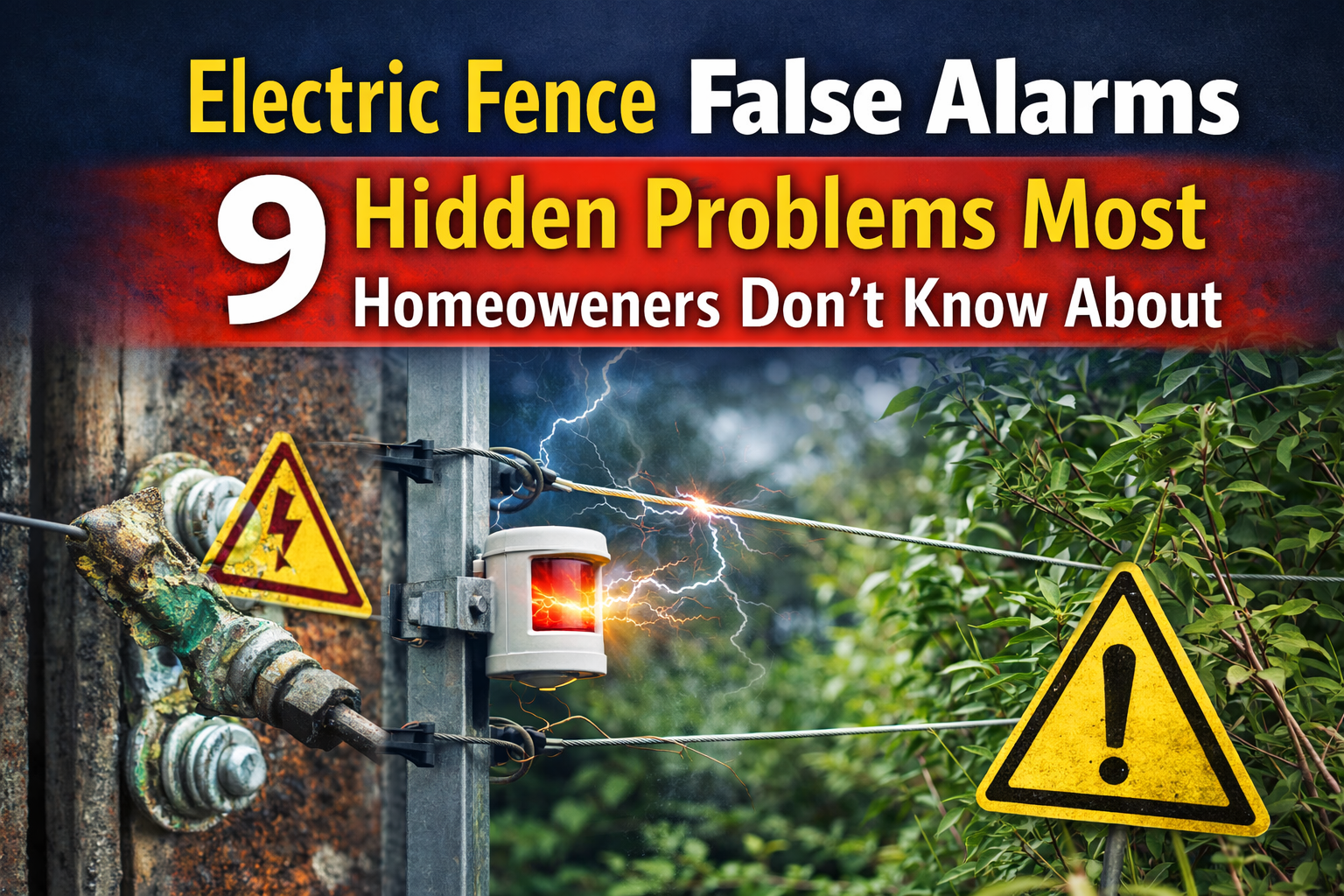
Electric Fence False Alarms: 9 Hidden Problems Most Homeowners Don’t Know About
Electric fences are one of the most effective perimeter security solutions for homes in Somerset West, Strand and Gordon’s Bay. When properly installed and calibrated, they provide an early warning system that detects intruders before they reach the home itself.
However, many homeowners experience a frustrating problem: electric fence alarms triggering repeatedly when nothing appears to be wrong.
False alarms can occur at any time — often late at night or during windy weather — leaving homeowners unsure whether the alarm indicates a real threat or simply another nuisance trigger. In many cases, the system itself is not faulty. The issue is usually caused by hidden technical or environmental factors that interfere with the fence’s monitoring system.
Understanding these causes is the first step toward restoring a reliable perimeter security system.
How Electric Fence Alarm Systems Actually Work
To understand why false alarms occur, it helps to know how electric fence monitoring works.
An electric fence system typically consists of:
- Fence wires running along the perimeter
- Insulated brackets attached to posts
- A fence energiser that powers the system
- An earth system that stabilises voltage
- A monitoring system connected to your alarm panel
The energiser sends high-voltage pulses through the fence wires at regular intervals. These pulses create a shock deterrent while also allowing the system to monitor the condition of the fence.
The energiser constantly checks for changes in:
- Voltage levels
- Current flow
- Wire continuity
- Disturbances along the fence line
If something interferes with the fence — such as a wire being cut, pushed, or grounded — the energiser detects the change and triggers an alarm.
However, many non-intrusion factors can cause similar disturbances, leading to false alarms.
The 9 Hidden Causes of Electric Fence False Alarms
Electric fence systems are sensitive by design. While this sensitivity improves security, it also means certain hidden problems can trigger nuisance alarms.
Here are nine of the most common causes.
1. Loose Fence Wires
Fence wires must maintain proper tension across the perimeter. Over time, wires can stretch slightly or tension springs can weaken.
When wires become loose, strong coastal winds can cause them to vibrate, producing voltage fluctuations that the energiser interprets as tampering.
2. Poor Earth Spike Installation
The earth system is critical to electric fence stability. If earth spikes are poorly installed or corroded, the energiser may struggle to maintain consistent voltage levels.
This instability can trigger alarms even when the fence itself is untouched.
3. Vegetation Touching the Fence
Plants, branches, or climbing vines touching the fence wires can partially ground the system.
During windy conditions, moving vegetation can repeatedly touch and release the wires, causing intermittent electrical disturbances that trigger alarms.
4. Salt Corrosion on Fence Components
Homes in Strand and Gordon’s Bay are particularly exposed to salt carried in coastal air.
Salt accelerates corrosion on:
- Fence connectors
- Wire joins
- Gate contacts
- Earth clamps
Corrosion can weaken electrical connections and cause irregular voltage readings.
5. Incorrect Energiser Sensitivity Settings
Many electric fence energisers allow technicians to adjust sensitivity levels.
If sensitivity is set too high, the system may trigger alarms from minor environmental movement or electrical fluctuations.
Proper calibration balances security detection with environmental stability.
6. Fence Brackets Moving in Wind
Fence brackets attached to posts hold the wires in position. If brackets loosen or posts shift slightly over time, wind movement can cause small changes in wire position.
Even minor shifts may register as disturbances.
7. Gate Contact Problems
Electric fences typically include gate contact sensors that detect whether the gate is open or closed.
If these contacts become misaligned or corroded, the system may incorrectly register the gate as tampered with.
8. Cable Damage or Poor Joins
High-voltage cable connects the energiser to the fence wires. Damage to this cable — often caused by weather exposure or poor installation — can create electrical interference.
Similarly, poorly made joins along the fence line can introduce resistance that affects system stability.
9. Ageing Components
Electric fence systems operate outdoors year-round and are exposed to sun, wind, rain and salt air.
Over time, components such as:
- Insulators
- Connectors
- Springs
- Earth clamps
can degrade, leading to unreliable performance and repeated alarms.
Signs Your Electric Fence System Needs Professional Calibration
Many homeowners only investigate their electric fence when alarms become excessive. However, several warning signs suggest the system may need inspection or calibration.
Watch for these indicators:
- Frequent alarms during windy weather
- Alarms occurring late at night without visible disturbance
- Alarm notifications with no visible damage to the fence
- Security companies responding to repeated false triggers
- Electric fence voltage readings fluctuating significantly
If any of these symptoms occur regularly, the fence system may require professional optimisation and maintenance.
Why Coastal Areas Experience More Electric Fence Problems
Electric fences installed in inland suburbs often perform reliably for many years without major adjustment.
However, homes in Somerset West, Strand and Gordon’s Bay face additional environmental pressures.
Strong Coastal Winds
The Helderberg region experiences powerful seasonal winds that can cause fence wires and vegetation to move repeatedly.
Salt Air Exposure
Salt carried in sea air accelerates corrosion on exposed metal parts, especially electrical connectors.
High Humidity and Moisture
Coastal humidity can affect electrical insulation and connections, particularly on older systems.
Because of these factors, electric fence systems in coastal areas often require more frequent inspection and calibration than those installed inland.
How Professional Electric Fence Optimisation Reduces False Alarms
False alarms can usually be resolved without replacing the entire system. In most cases, a professional inspection and optimisation process identifies the root cause.
A typical electric fence optimisation includes several steps.
Fence Tension Adjustment
Technicians inspect and adjust wire tension to ensure consistent spacing and stability along the perimeter.
Earth System Testing
Proper grounding is critical for stable operation. Earth spikes are tested and improved where necessary.
Sensitivity Calibration
Energiser sensitivity settings are adjusted to maintain reliable detection while reducing environmental interference.
Vegetation Management
Branches, plants and climbing vines that contact the fence are identified and cleared.
Component Inspection
Technicians check all connectors, insulators, gate contacts and cables for wear, corrosion or loose fittings.
This optimisation process dramatically improves system stability while maintaining the fence’s ability to detect genuine intrusions.
Final Thoughts
Electric fences are an excellent security solution when properly installed and maintained. However, environmental conditions and small technical issues can cause nuisance alarms that frustrate homeowners.
Loose wires, vegetation contact, corrosion and incorrect calibration are among the most common causes of electric fence false alarms.
Fortunately, most of these issues can be resolved through professional inspection, adjustment and system optimisation.
For homeowners in Somerset West, Strand and Gordon’s Bay, ensuring your electric fence is calibrated for coastal conditions can significantly improve reliability and reduce unnecessary alarm activations.
Helderberg Security Services offers a Free Perimeter Security Inspection for homes in the Helderberg area, helping homeowners identify hidden issues and ensure their electric fence systems operate as intended.