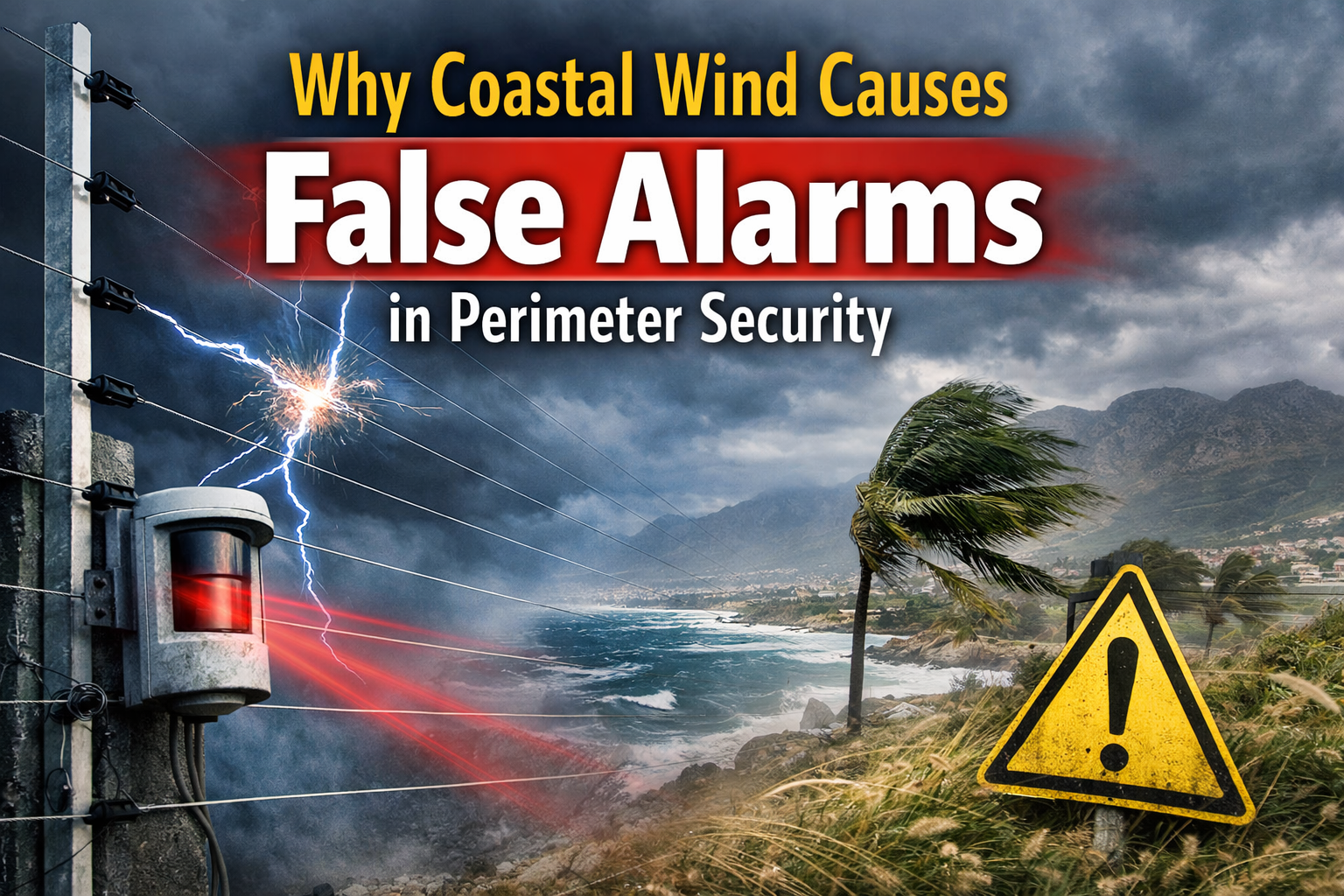
Why Coastal Wind Causes False Alarms in Perimeter Security Systems (And How to Fix It)
If you live in Somerset West, Strand, or Gordon’s Bay, you have probably experienced it at least once: your perimeter alarm suddenly triggers in the middle of a windy night, only to discover there was no intruder at all.
False alarms are extremely common in coastal areas, especially in suburbs exposed to the strong south-easter winds that regularly move through the Helderberg basin. Many homeowners assume their alarm system is faulty. In reality, the issue is often environmental interference combined with poor system calibration.
Perimeter security systems such as electric fences, outdoor beams, and perimeter alarm sensors are designed to detect movement and disturbances. However, when these systems are installed or calibrated without accounting for coastal wind, vegetation movement, and salt air corrosion, they can become overly sensitive and unreliable.
Understanding why these false alarms happen — and how to prevent them — is essential for maintaining a reliable perimeter security system in coastal environments.
Why Coastal Areas Are Harder on Security Systems
Security systems installed inland operate under relatively stable environmental conditions. Coastal properties, however, face a completely different set of challenges.
Homes in Gordon’s Bay, Somerset West, and Strand are exposed to conditions that can significantly affect the performance of perimeter detection systems.
Strong and Gusting Coastal Winds
The Helderberg region regularly experiences powerful winds, particularly during the summer south-easter season. These winds can cause:
- Fence wires to vibrate or flex
- Fence posts to shift slightly
- Plants and trees to move against fences
- Outdoor sensors to detect constant motion
When a perimeter system is not properly calibrated, this environmental movement can easily trigger alarms.
Salt Air and Coastal Corrosion
Another major factor is salt carried in sea air, which accelerates corrosion on exposed metal components.
Over time this can affect:
- Electric fence wires
- Fence connectors and tension springs
- Sensor housings
- Outdoor beam brackets
Corrosion can alter the electrical behaviour of a fence or cause loose connections that result in random alarm triggers.
Moving Vegetation
Properties with trees, shrubs, or climbing plants near the perimeter often experience false alarms during windy conditions.
Branches touching an electric fence or moving in front of outdoor beams can cause repeated triggers, especially when systems are set to maximum sensitivity without environmental adjustment.
Flexible Fence Structures
Older fences or lightweight fencing materials can flex under wind pressure. Even small movements may be interpreted by electric fence monitors as a tamper or disturbance event.
Without proper tension adjustment, these movements become a common cause of false perimeter alarms.
Temperature and Environmental Changes
Outdoor security sensors are also affected by temperature variations between day and night. Combined with wind and humidity changes, sensors may respond unpredictably if they are not configured correctly.
For coastal properties, standard factory settings rarely work well long-term.
The Most Common Causes of False Alarms
While environmental conditions contribute to the problem, the majority of false alarms occur because the system was never properly calibrated for the environment.
Here are the most common technical causes.
Incorrect Electric Fence Tension
Electric fence wires must maintain consistent tension to operate correctly. If the wires are too loose, wind can cause them to vibrate and trigger alarms.
Over time, tension springs can weaken, and fence wires can stretch slightly. Without periodic adjustment, the system becomes unstable.
Poorly Calibrated Fence Energisers
The energiser is the device that powers and monitors the electric fence. Many systems allow sensitivity settings that determine how easily disturbances trigger alarms.
If the sensitivity is set too high, even minor environmental movement can activate the system.
Proper calibration ensures the fence detects genuine tampering while ignoring normal environmental movement.
Outdoor Beams Triggered by Moving Objects
Outdoor beam sensors are commonly installed along driveways, side passages, or garden areas.
False alarms often occur when:
- Plants move in front of the beam
- Loose objects blow through the detection area
- The beam alignment shifts slightly due to wind
If beams are not positioned and calibrated carefully, they may detect normal environmental activity as an intrusion.
Fence Wires Vibrating in Wind
In windy areas like the Helderberg coastline, electric fence wires can resonate slightly during strong gusts.
This vibration may cause the system to register:
- Rapid voltage fluctuations
- Wire movement alerts
- Tamper triggers
Without proper tension and calibration, this can cause frequent nuisance alarms during windy weather.
Incorrect Sensitivity Settings
Many security installations are configured using default manufacturer settings.
While these settings may work in calm environments, they are rarely ideal for coastal properties exposed to wind and environmental movement.
Professional calibration adjusts sensitivity levels based on the actual conditions of the property.
Signs Your Perimeter System Is Poorly Calibrated
If your alarm system frequently triggers without an obvious cause, it may be time to inspect the perimeter setup.
Common warning signs include:
- Alarms that occur mainly during windy weather
- Repeated fence alarms late at night
- Outdoor beams triggering when no one is present
- Electric fence alerts without visible tampering
- Security companies responding to frequent false alarms
False alarms not only create frustration for homeowners but can also lead to alarm fatigue, where genuine alerts may be taken less seriously.
A properly calibrated system should remain stable even during strong coastal winds.
How Professional Calibration Reduces False Alarms
One of the most effective ways to improve perimeter security reliability is through professional system calibration and environmental optimisation.
This process involves adjusting the system to match the unique conditions of the property.
Electric Fence Tension Adjustment
Technicians inspect the fence wires and tension springs to ensure they maintain proper tension across the entire perimeter.
This prevents wind vibration from triggering alarms.
Sensitivity Calibration
Security specialists adjust the energiser settings so the fence detects genuine disturbances while ignoring normal environmental movement.
This balance is critical in coastal areas.
Vegetation Management
Plants and branches near fences and outdoor beams are identified and trimmed to prevent movement from interfering with sensors.
Even small plants can cause repeated alarms when exposed to strong winds.
Wind Compensation Settings
Many modern electric fence systems include advanced monitoring features that allow technicians to compensate for environmental movement.
Proper configuration helps maintain stability during windy conditions.
Corrosion Inspection
In coastal environments, components are inspected for salt corrosion or loose electrical connections.
Replacing or securing these parts prevents random triggers caused by unstable electrical signals.
Why Coastal Properties Need Specialised Security Setup
Security installations designed for inland suburbs often perform poorly when installed in coastal regions.
The Helderberg coastline introduces environmental factors that require specialised system configuration and ongoing maintenance.
Homeowners in Somerset West, Strand, and Gordon’s Bay benefit from perimeter systems that are specifically calibrated for:
- High coastal wind exposure
- Salt air corrosion
- Moving vegetation
- Flexible fence structures
When these factors are properly accounted for, perimeter security systems become significantly more reliable.
Instead of responding to constant nuisance alarms, homeowners gain consistent protection and peace of mind.
Final Thoughts
False alarms are one of the most common frustrations for homeowners with perimeter security systems. In coastal areas like the Helderberg, the problem is often caused by environmental factors combined with improper calibration.
Wind, vegetation movement, corrosion, and fence vibration can all interfere with poorly configured systems. However, with the right setup and regular inspection, these issues can be greatly reduced.
A professionally calibrated system ensures your perimeter security detects real threats while remaining stable during normal coastal conditions.
For homeowners in Somerset West, Strand, and Gordon’s Bay, one of the most effective steps is to have the system inspected specifically for wind-related false alarm risks.
Helderberg Security Services offers a Free Wind-Specific Perimeter Security Audit, helping homeowners identify calibration issues and optimise their perimeter systems for the unique conditions of the Helderberg coastline.