Why Your Small Business Needs IP Access Control (And Where to Start)
Running a small business in the Helderberg area is incredibly rewarding, but it comes with a unique set of management challenges. Whether you operate a retail boutique in Somerset West, a bustling office block in Strand, or a beachside establishment in Gordon’s Bay, keeping your premises safe is a top priority.
While outdoor cameras and perimeter alarm systems do an excellent job of keeping external threats out, what happens once the front door opens for the day? Managing the flow of staff, customers, and delivery personnel can quickly become chaotic. If you are still relying on traditional metal keys to secure your business, your property, stock, and data could be at risk.
Here is why upgrading to an IP Access Control system is one of the smartest operational moves you can make for your small business.
What is IP Access Control?
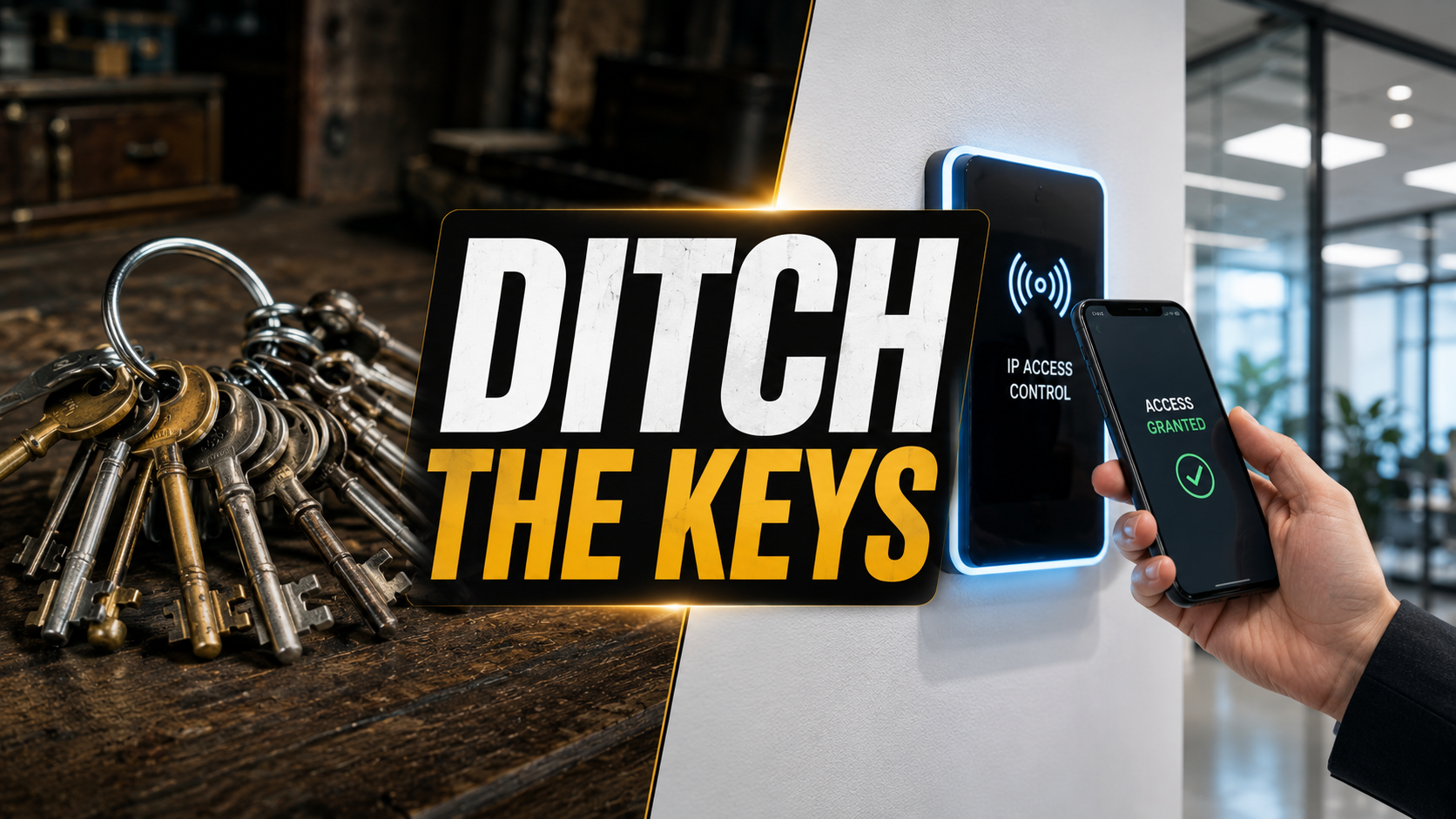
Traditional locks rely on a physical piece of metal that can be easily lost, copied, or stolen. IP Access Control replaces these outdated systems with electronic locks connected directly to your business’s local network (IP stands for Internet Protocol).
Instead of a key, your employees use secure digital credentials to unlock doors. These credentials can take the form of:
- Proximity Cards or Fobs: Small, durable tags tapped against a wall reader.
- Biometric Scanners: High-security fingerprint or facial recognition readers.
- Smartphone Credentials: An app on the employee’s phone that unlocks the door via Bluetooth or Wi-Fi.
Because the system is networked, you can manage every door in your building in real time from a computer or smartphone dashboard.
3 Major Benefits for Your Business
Switching to a digital access control system solves several common operational headaches overnight.
1. Eliminating the “Lost Key” Problem
When an employee leaves your company under strained circumstances or accidentally loses a physical shop key, your business security is immediately compromised. The only way to restore security is to hire a locksmith, pay to change the physical locks, and cut new keys for your entire staff complement.
With IP Access Control, there are no physical keys to worry about. If a staff member leaves or loses their fob, you simply log into your dashboard and revoke their digital access instantly. The old credential becomes useless plastic, and you don’t have to spend a cent on new hardware.
2. Preventing Internal Shrinkage & Unauthorized Access
Not every room in your business should be accessible to everyone. Stock rooms, server closets, administrative offices, and cash-up areas need strict boundaries.
IP Access Control allows you to set customized access privileges for every individual. For example, your front-of-house retail staff can be granted access to the main entrance and the staff kitchen, but only managers will have the credentials required to unlock the high-value inventory cage or back office. This significantly reduces internal shrinkage and protects sensitive company data.
3. Detailed Audit Trails & Time Management
If a high-value item goes missing from your stock room or a server is tampered with over the weekend, finding the culprit in a traditional lock-and-key setup is nearly impossible.
An IP system automatically records a digital “audit trail” every time a door is opened. Your system log will show exactly who unlocked the door, the exact date, and the precise time down to the second. Additionally, this data can double as an accurate time-and-attendance tracker, helping you monitor exactly when staff members arrive and leave their shifts.
Where to Start: Scaling Your Security
Upgrading your business security doesn’t mean you have to rip out every lock and spend a fortune all at once. The beauty of modern IP systems is their modular, scalable nature.
Step 1: Secure Your Perimeter
Start by securing your primary entry and exit points. This controls the main flow of traffic into your business during operating hours and ensures no unauthorized visitors can wander onto the premises unnoticed.
Step 2: Protect High-Value Zones
Identify your most sensitive internal areas—usually the main server/IT room or your primary stock room—and add electronic locks to these specific doors next.
Step 3: Integrate and Expand
As your business grows or your budget allows, you can easily add more doors to the network. Modern IP systems can also be integrated directly with your existing CCTV cameras or fire alarm systems, automatically unlocking emergency exits in the event of a fire while recording video clips whenever a restricted door is accessed.
Take Control of Your Business Security Today
Physical keys belong in the past. To run an efficient, secure, and modern business in the Helderberg basin, you need a system that gives you complete visibility and control over your premises.
Contact Helderberg Security Services today for a professional, on-site commercial security assessment. Our team will design a scalable IP Access Control system tailored perfectly to your layout, operational workflow, and business goals.