Then Hardwired. Now Smart: Upgrading Your Alarm System Without Starting Over
If your alarm system was installed 15 or 20 years ago, it was probably built properly.
Hardwired zones. Solid copper cabling. A metal control panel in the ceiling. A simple keypad by the front door.
Many of those systems are still structurally sound.
What has changed is not the wiring — it is the technology around it.
Smartphones replaced landlines. Analogue communicators became IP-based. Basic sirens became app alerts and live camera verification.
Upgrading your alarm system in Gordon’s Bay, Somerset West or Strand should not mean ripping out everything. It should mean modernising intelligently.
How Alarm Systems Have Evolved
Older systems were designed around:
- Landline diallers
- Basic GSM modules
- Keypad-only interaction
- Limited zone feedback
- No remote visibility
Modern systems now offer:
- App-controlled arming and disarming
- Instant push notifications
- LTE and IP communication
- Remote diagnostics
- CCTV integration
- Off-site monitoring visibility
The biggest shift is control and visibility — not necessarily detection hardware.
What Still Has Value in a 20-Year-Old System
Hardwired Cabling
Copper alarm cable, when installed correctly, can last decades. If continuity tests pass and insulation is intact, there is no reason to replace it.
Door and Window Contacts
Magnetic reed switches are simple and reliable. If they function properly, they can remain in service.
External Siren Wiring
If tamper circuits and power lines are intact, sirens remain usable and effective.
Power Supply Points
Panel placement and conduit routing often still support modern upgrade paths.
Before recommending replacement, we test:
- Zone resistance
- Tamper loops
- Voltage stability
- Backup battery condition
- Panel board integrity
Upgrades should be diagnostic-led, not age-led.
The Smart Upgrade Path (Without Starting Over)
Stage 1: Panel and Communicator Upgrade
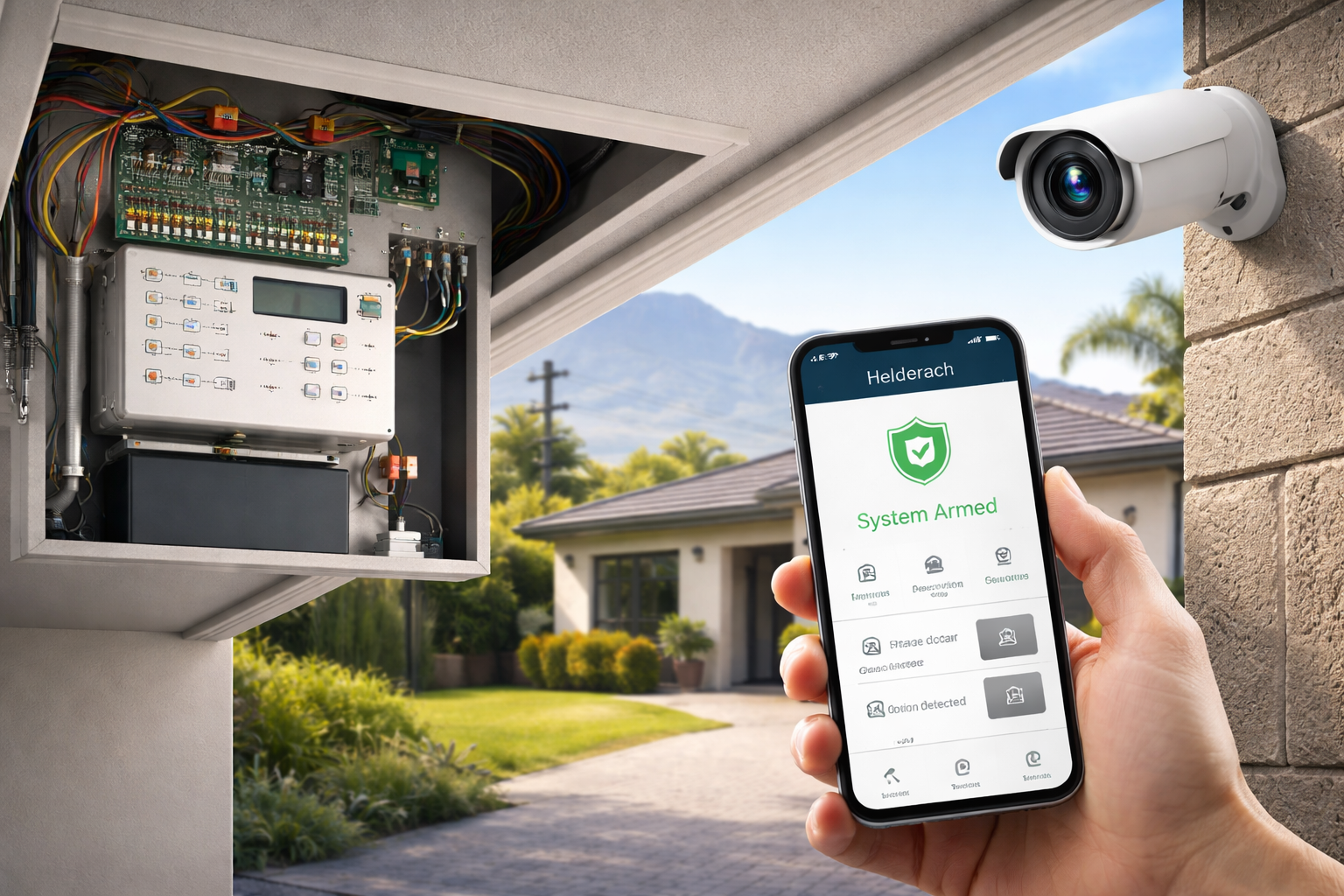
The most impactful first step is upgrading the control panel or adding a modern communicator module.
- IP communication modules
- LTE dual-path communicators
- App-enabled control boards
This enables remote control and real-time alerts without replacing your existing wiring.
Stage 2: App Control and Remote Access
Modern systems allow:
- Remote arming and disarming
- Instant zone alerts
- Push notifications
- System status monitoring
This is often the most noticeable upgrade for homeowners.
Stage 3: Selective Sensor Modernisation
We replace only what needs improvement:
- Outdated PIR sensors
- Sensors prone to false triggers
- High-traffic areas needing digital accuracy
Wireless sensors can be added where running new cable is impractical, creating a hybrid system that blends legacy wiring with modern flexibility.
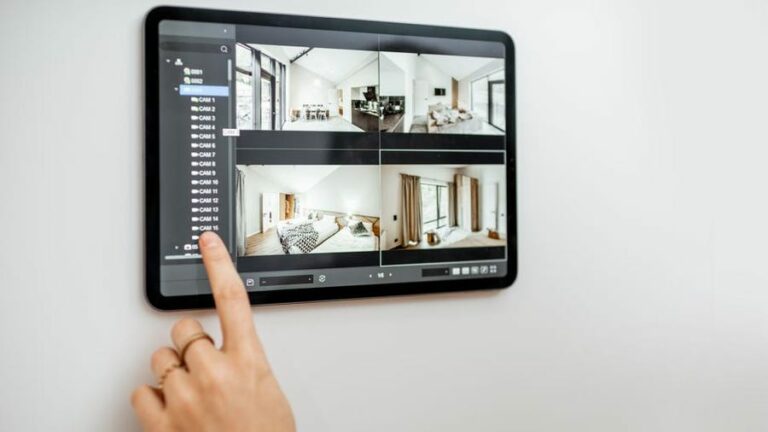
Stage 4: IP Camera Installation
Adding CCTV does not require tearing out alarm wiring.
IP camera installation typically uses:
- PoE (Power over Ethernet) cabling for stability
- Structured network routing
- Dedicated NVR storage
This allows instant visual verification when alarms trigger.
Stage 5: Off-Site Monitoring Optimisation
Older systems relied on landlines or basic GSM modules. Modern dual-path communication ensures faster and more reliable signal transmission.
CCTV Integration Without Rewiring the House
PoE vs Wi-Fi Cameras
PoE Cameras: Stable, hardwired and suitable for permanent installations.
Wi-Fi Cameras: Flexible and easier to retrofit but dependent on network strength.
For most freestanding homes in Helderberg, PoE systems provide greater long-term reliability.
Strategic Camera Placement
- Driveway approach
- Pedestrian gate
- Garage entry
- Blind perimeter corners
Cameras should complement your alarm system — not duplicate it.
Common Mistakes During Alarm System Upgrades
- Replacing entire systems unnecessarily
- Mixing incompatible brands
- Installing consumer-grade cameras without storage planning
- Ignoring network capacity
- Skipping maintenance
Security should be engineered — not impulse purchased.
Upgrade Assessment Checklist
- Panel age and compatibility
- Communicator type (none, GSM, LTE, IP)
- Battery condition
- Zone functionality
- False trigger history
- CCTV readiness (power, conduit, network capacity)
If wiring remains intact and zones are functioning, you may only need a smart panel upgrade — not full system replacement.
FAQ
Do I need to replace my whole alarm system?
In most cases, no. If wiring and sensors are functioning, upgrading the control panel and communicator is often sufficient.
Can I keep my old wired sensors?
Yes, provided they pass continuity and resistance testing.
Can app control be added to older systems?
In many cases, yes — through modern control panel upgrades or communicator modules.
Is IP camera installation worth it if I already have beams?
Yes. Beams detect movement. Cameras provide visual verification and recording.
What is the most cost-effective first upgrade?
Upgrading the panel or communicator to enable app functionality usually provides the highest impact.
Book a Legacy Alarm Upgrade Assessment – Helderberg
We assess existing wiring integrity, panel compatibility, communicator options and CCTV integration pathways.
If you are in Gordon’s Bay, Somerset West or Strand and want to modernise your system intelligently — without unnecessary replacement — we will guide you through a structured upgrade path.